When building a retaining wall, you’re not just shaping your landscape—you’re creating a structure that must stand the test of time, weather, and soil pressure. That’s why many Canadian homeowners turn to concrete. But which option is better: precast concrete or concrete block (CMU)?
Both methods offer durability, strength, and longevity, but they differ in design flexibility, installation time, and performance under Canadian freeze-thaw cycles. Let’s break it down to help you decide what’s best for your property.
What Is a Precast Concrete Retaining Wall?
Precast concrete retaining walls use factory-molded panels or blocks designed specifically for soil retention. These units are produced off-site, transported to your location, and assembled using engineered systems such as interlocking panels or stacked modular blocks.
✅ Advantages of Precast Concrete Retaining Walls
- Quick installation thanks to prefabricated elements
- Factory-controlled production ensures consistent strength and appearance
- Excellent durability against frost heave and erosion
- Minimal maintenance (no repainting or sealing required)
- Available in a variety of textures (stone, brick, woodgrain)
- Often rated for heavy load-bearing and steep slope reinforcement
❌ Disadvantages
- Higher initial cost than traditional block walls
- Limited flexibility on-site (prefab dimensions must fit the layout)
- May require cranes or lifting equipment
- Fewer installers specialize in large precast systems
- Complex to replace if damaged
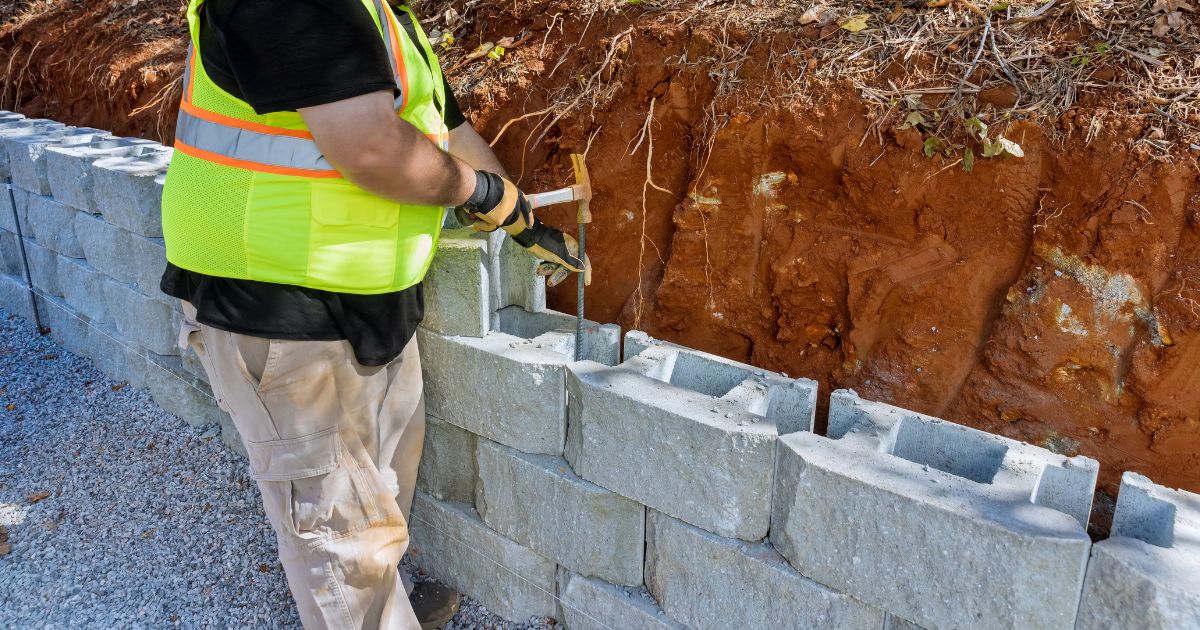
What Is a Concrete Block Retaining Wall?
Concrete block, or CMU (Concrete Masonry Unit) retaining walls, are built on-site using individual blocks reinforced with rebar and grout. This method is traditional but versatile, especially for walls with curves, height variations, or embedded features like stairs and planters.
✅ Advantages of Concrete Block Walls
- Highly customizable to fit terrain and design needs
- Lower upfront cost than precast
- Easier to build tiered or curved layouts
- Many local contractors have experience with CMU systems
- Repairs are straightforward (replace individual blocks)
- Can be finished with stone veneer, paint, or parging
❌ Disadvantages
- Longer construction time
- Mortar joints can crack over time, especially in freeze-thaw zones
- Quality depends heavily on builder skill
- Requires regular maintenance and inspection
- Vulnerable to water intrusion without proper drainage
Retaining Wall Face-Off: Precast vs Concrete Block
| Feature |
Precast Concrete |
Concrete Block (CMU) |
| Installation Time |
1–3 days |
1–2+ weeks |
| Load Capacity |
High, engineered |
Moderate to high (reinforced) |
| Customization |
Limited to panel/block sizes |
Fully customizable on-site |
| Cost per Linear Foot |
$100–$180 CAD |
$70–$130 CAD |
| Maintenance |
Low |
Moderate |
| Frost Resistance |
Excellent (few joints) |
Good (depends on mortar/grout quality) |
| Terrain Adaptability |
Best for straight lines or modular systems |
Ideal for irregular terrain or curves |
Best Use Cases for Each Type
Choose Precast Concrete Retaining Walls When:
- You want a fast, clean installation
- Your design is straightforward (e.g., a straight wall or slope)
- Aesthetics and uniformity are top priorities
- You need structural performance on steep grades
- You prefer a low-maintenance solution
Choose Concrete Block Retaining Walls When:
- Your site has curved or uneven terrain
- You need custom heights or step features
- You’re working on a budget
- You want to integrate planters or steps into the wall
- Repairs and flexibility matter long-term
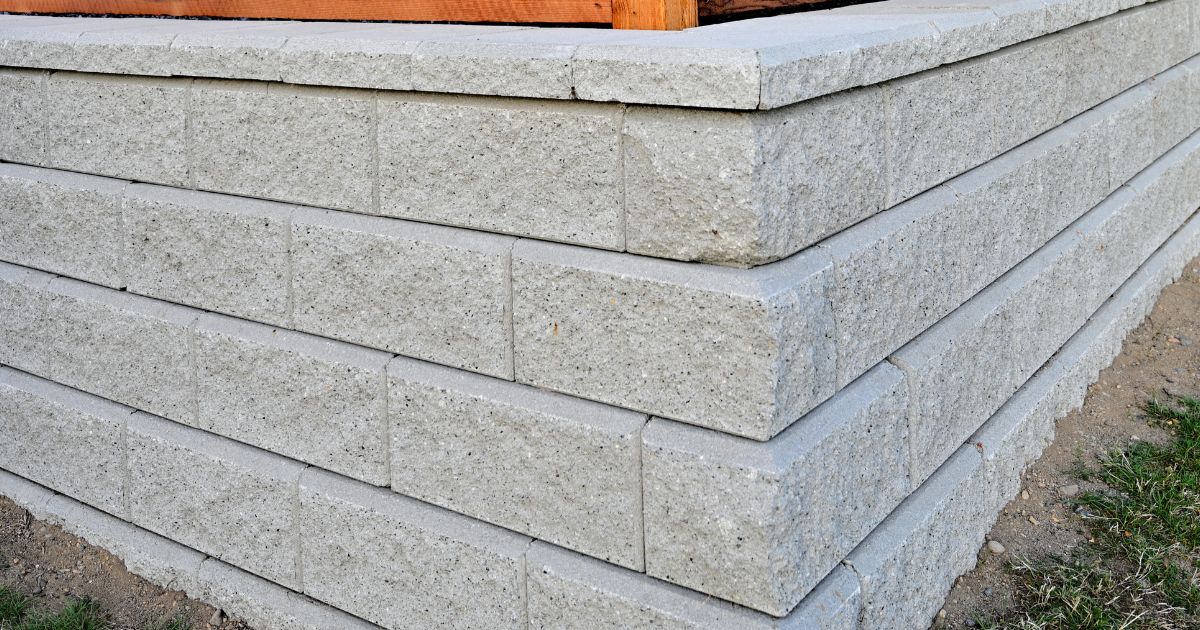
Three Popular Precast Retaining Wall Styles in Canada
1. Segmental Retaining Wall Blocks (SRWs)
Engineered blocks that lock together without mortar.
- Easy to install
- Great for medium-height residential walls
- Come in stone or smooth finishes
2. Large-Scale Panel Systems
Used for taller or commercial-grade walls.
- Strong and stable under heavy loads
- Often require crane installation
- Best for highway slopes or tiered commercial landscapes
3. Textured Modular Blocks
Combine the ease of precast with a natural stone look.
- Stackable without visible seams
- Designed for high-end landscape designs
- Available in many colours and textures
Don’t Forget Permits and Drainage
Before you build a retaining wall in Canada—especially one over 1.2 metres (4 feet) in height—you’ll likely need:
- A building permit
- Engineering drawings
- Soil analysis
- Proper drainage and backfill materials
Each province and municipality has unique rules. Always check with your local building authority to avoid delays or fines.
Final Verdict: Precast or Concrete Block?
Choosing between precast concrete vs concrete block for your retaining wall depends on your site conditions, budget, and design vision.
- Precast is the way to go if you need speed, consistency, and a sleek finish.
- Concrete block is best if you want flexibility, cost control, and on-site customization.
Both are strong choices for Canadian landscapes—as long as they’re installed with the proper foundation, drainage, and reinforcements.
Get Expert Help for Your Retaining Wall Project
Retaining walls are serious structures—don’t leave your investment to guesswork. Whether you choose precast or CMU, our concrete wall specialists can:
- Evaluate your slope and soil
- Help with design and material selection
- Provide proper drainage and reinforcement plans
➡️ Request a Free Retaining Wall Consultation Today