Self leveling concrete is great for fixing uneven floors. But, in some cases, it’s not the right choice. Knowing the self leveling concrete disadvantages helps save time and money. It also helps homeowners look for other flooring options.
Main Points on Using Self Leveling Concrete
- Self leveling concrete might not be ideal in certain climates.
- Not all substrates are suitable for self leveling applications.
- Extensive surface preparation might be required.
- Budget and time constraints can influence the decision.
- Exploring flooring alternatives can be beneficial.
What is Self Leveling Concrete
Self-leveling concrete is a special type of concrete designed to flow and spread out evenly on its own without much need for troweling. It’s thinner than regular concrete but still super strong once it cures. People mainly use it to create smooth, flat surfaces over old concrete, wood, or tiles — like prepping floors before laying tiles, carpet, or hardwood.
Quick points:
- It levels itself after being poured.
- It’s fast-setting — often ready to walk on within a few hours.
- Perfect for fixing uneven or damaged floors.
- Can be used indoors (like basements, kitchens) and sometimes outdoors too with the right type.
Common Uses and Benefits
It’s used a lot in homes, shops, and big buildings to get floors ready for new coverings. It’s key for laying down tiles, wood floors, or carpets smoothly. The benefits are big:
- Time Efficiency: It sets quickly, which helps speed up building or remodeling.
- Durability: It’s tough and lasts a long time, even in busy spots.
- Versatility: It works with many different types of flooring, giving you more choices.
Choosing this method means you get a perfect finish easily. It shows how effective and strong this solution is for many projects.
Environmental Limitations of self leveling concrete
When setting up self leveling concrete, it’s crucial to think about environmental considerations. Look into concrete floor leveling temperature and humidity’s effect on flooring.
In Canada, weather changes a lot. This affects how you apply and cure concrete. In very cold or hot weather, watching the concrete floor leveling temperature closely is key. Ignoring this can cause bad sticking and cracks.
Also, if it’s too humid, the curing process can be messed up. This messes with the humidity’s impact on flooring stability.
Studies have found that controlling the environment right, mainly by keeping the climate steady during application, makes self leveling concrete last longer and look better. So, knowing how the weather affects the process and adjusting how you do things means the end result will be strong and look good.
Substrate Challenges Leading to Self-Leveling Concrete Failures
The condition and compatibility of the substrate are key when using self leveling concrete. Often, we must prepare the concrete substrate to ensure success. We’ll look at challenges caused by substrate issues and how to overcome them.
Unsuitable Surfaces
Some floors don’t work well with self leveling concrete. Surfaces like plywood or old vinyl can have adhesion problems. These incompatible flooring surfaces need careful evaluation. Sometimes, we have to remove them to ensure a stable base for concrete.
Substrate Stability Concerns
Stability is crucial for flooring substrate. If the substrate bends, vibrates, or deflects too much, it can affect the concrete. To fix these issues, we might need to assess and strengthen the base.
Need for Extensive Surface Preparation
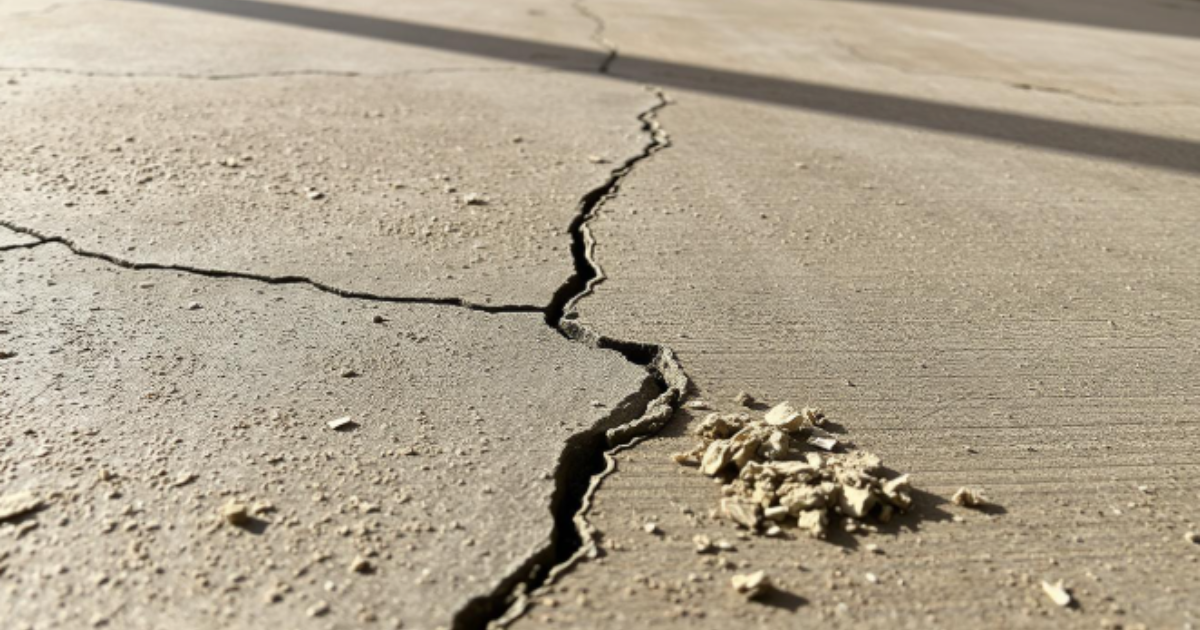
Proper preparation of the concrete substrate is critical. This involves cleaning, priming, and fixing the surface. If we don’t prepare well, the new flooring might not adhere properly. MAPEI suggests inspecting and fixing any cracks or damage first.
How to Use Self-Leveling Concrete
- Prepare the Area
- Clear everything out: furniture, debris, dust — the floor has to be clean.
- Fix any major cracks or holes with patching compound.
- Seal edges with foam tape if needed (like around walls and drains).
- Apply Primer
- Roll or brush on a bonding primer over the surface.
- Let it dry (usually around 1–3 hours depending on the product).
- Mix the Self-Leveling Concrete
- Use a power drill with a mixing paddle (you’ll burn your arms trying to hand-mix this!).
- Follow the bag instructions carefully: water-to-powder ratio must be exact.
- Mix until it’s smooth — no lumps, no dry spots.
- Pour the Mix
- Start at one corner or the highest spot.
- Let it naturally flow and fill low areas.
- Work quickly — you usually have about 10–20 minutes before it starts setting.
- Help It Spread
- Use a gauge rake or squeegee to gently guide the concrete where you need it.
- Don’t overwork it — it levels itself pretty well.
- Let It Cure
- No foot traffic for 2–4 hours.
- Don’t install flooring until after 24–48 hours for full cure.
Pro Tips for a Perfect Job:
- Work in sections if it’s a big area.
- Keep the room temperature steady (too hot or too cold messes with the curing).
- Have all your tools ready before you start mixing — this stuff waits for no one!
Where It’s Best Used:
- Basements (fixing sloping floors)
- Bathrooms (before installing tiles)
- Kitchens (under vinyl or wood flooring)
- Commercial spaces (like showrooms where a smooth, clean look matters)
Bonus tip:
There are even self-leveling UNDERLAYMENTS (used under flooring) and TOPPINGS (for decorative finished surfaces). So you can either cover it up or leave it exposed, depending on the look you want!
FAQ
When should you not use self leveling concrete?
Avoid using self leveling concrete in very cold or wet environments. It’s not suitable for shaky surfaces either. Tight budgets and deadlines might also make it a bad choice, as it can affect its quality and lifespan.
What is Self Leveling Concrete?
This is a special cement that spreads out to form a flat floor. It fixes uneven surfaces, readying them for different floorings. Self leveling concrete works well in homes, offices, and factories.
What are the common uses and benefits of self leveling concrete?
It’s mainly used in homes, workplaces, and factories for making floors even. The perks include easy use, saving time, lasting a long time, and fitting many types. It lays a perfect foundation for tile, carpet, or wood floors.
How do environmental conditions affect self leveling concrete?
Bad weather like extreme heat or cold, and moisture can ruin self leveling concrete. This leads to weak bonding, cracks, and uneven floors. For the best results, especially in Canada’s varied climate, you must adapt to the weather.
What types of surfaces are unsuitable for self leveling concrete?
Avoid it on surfaces that bend, shake, or sag. These pose a risk of bad outcomes and damage. Getting the surface ready often involves cleaning, priming, and fixing to ensure it’s solid and stable.
Why is substrate stability important for self leveling concrete?
A firm base is essential to prevent the concrete from cracking and failing. Stability ensures it dries and sticks correctly. This makes the surface strong and long-lasting.
What preparatory steps are needed before applying self leveling concrete?
Before applying, you must clean to remove any dust or dirt. Then, prime the base for a good grip, and fix cracks or damage. These steps are key for endurance and success.
What are the cost considerations of using self leveling concrete?
While offering many advantages, self leveling concrete might be more expensive due to the cost of materials and the need for experts to apply it. It’s smart to weigh these costs against other options, considering your budget.
How do time constraints affect the use of self leveling concrete?
Its application and drying demand a certain amount of time. Rushing this process can cause drying issues and defects. Make sure to schedule enough time for the best outcome.
Conclusion
Self leveling concrete is a strong and versatile option for getting smooth floors. We’ve seen its many uses and benefits. But we also need to think about possible downsides like its impact on the environment, problems with the underlying surface, and its cost and time needed.
Things like the weather and humidity can change how well the concrete works. We talked about this when discussing its limits. Problems with the surface you’re pouring it on, like stability, also matter a lot. Checking the site carefully first is key.
Lastly, how much it costs and how long it takes are big parts of deciding to use this concrete. These decisions should be made after getting professional advice. Thinking carefully about these factors leads to successful flooring projects. This wraps up our thoughts on making good choices when leveling floors.