Concrete flooring is tough, flexible, and stylish, making it a great choice for modern homes and businesses. But choosing the best type depends on what you need for your space — whether it’s about looks, durability, or maintenance.
This guide covers the top concrete flooring options, explains their pros and cons, and helps you pick the right one.
Why Choose Concrete Flooring?
Concrete floors are popular because they offer a mix of durability, design versatility, and cost-effectiveness. This flooring type is stylish yet strong.
Key Benefits:
- Extremely durable: Withstands heavy foot traffic, scratches, and stains.
- Low maintenance: Needs less upkeep compared to wood or tiles.
- Energy-efficient: Helps regulate indoor temperatures, cutting energy costs.
- Flexible design: Can mimic stone, wood, marble, or have a sleek industrial finish with raw surfaces or add glass or aggregate for patterns.
- Eco-friendly: Can incorporate recycled materials.
Top Types of Concrete Flooring (and When to Use Them)
- Polished Concrete
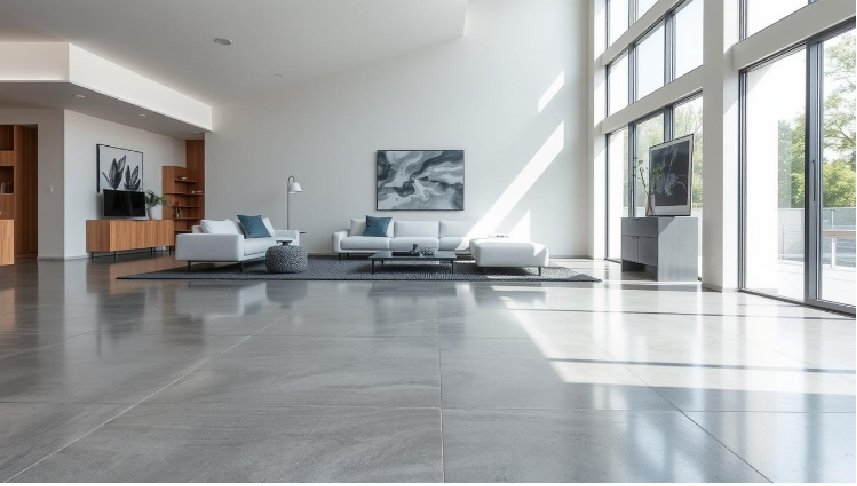
Concrete polishing utilizes heavy-duty grinders equipped with progressively finer grits of diamond abrasives on a concrete slab to achieve a glossy, durable finish.
Polished concrete floors are ideal for commercial kitchens, warehouses, or modern minimalist homes.
With proper maintenance, this flooring can last over 25 years — surpassing the lifespan of many vinyl or tile flooring options.
Polished concrete Installation Time: Up to 28 days to fully cure (but worth the wait).
- Epoxy Coatings
Concrete epoxy coatings are protective resin layers applied to concrete surfaces, enhancing durability, chemical resistance, and aesthetics. They consist of epoxy resin and a hardener, creating a rigid barrier.
They are perfect for garages, auto shops, and industrial areas.
Epoxy Coatings Installation Time: 24 hours cure time.
- Stamped Concrete
Stamped concrete (also called patterned or imprinted concrete) is a decorative technique where textures and designs mimicking materials like brick, stone, tile, or wood are pressed into freshly poured concrete.
It combines affordability with high-end aesthetics, offering a durable alternative to pricier paving materials.
It’s great for patios, walkways, and outdoor areas as it help reduce heat absorption outdoors by 15–20% compared to bare concrete.
- Stained Concrete
Stained concrete is a decorative technique where chemical or water-based stains are applied to concrete surfaces to create permanent, translucent color effects. Unlike paint or coatings, stains penetrate the concrete’s pores, bonding chemically to produce rich, variegated hues that mimic natural stone, marble, or wood without sacrificing strength.
- Concrete Decorative Embeds
Concrete decorative embeds are objects or materials intentionally placed into wet concrete to create aesthetic or functional enhancements once the concrete cures.
They serve dual purposes: adding visual appeal and providing structural attachment points and are popular for entryways, living rooms, or artistic spaces.

Acid-Stained Concrete Floors vs. Stained Concrete Floors
Acid-Stained Concrete Floors:
How it’s done: Acid stains use a chemical reaction between the acid (usually a mix of water, acid, and metallic salts) and the minerals already present in the concrete.
Result: Creates a natural, variegated, mottled look — like marble or leather. No two floors look exactly the same.
Color Range: Mostly earthy tones — browns, terracotta, greens, and blues. Limited color selection.
Durability: Very durable because the color penetrates and becomes part of the concrete, not just sitting on top.
Vibe: More organic, unpredictable, and artistic.
Stained (Water-Based) Concrete Floors:
How it’s done: Stains (especially water-based) coat the concrete surface. It’s more like painting or dyeing.
Result: More uniform and controlled color coverage. You can get solid colors or translucent effects.
Color Range: Way more colors available — bright reds, yellows, purples, etc.
Durability: Still strong, but since it’s more of a surface treatment, it may need a good sealer and occasional maintenance.
Vibe: More predictable, customizable, and modern.
Quick Tip:
If you want a natural, earthy, unique floor — go acid stain.
If you want bright colors or a specific design/pattern — go water-based stain.
Note: Many contractors combine these methods for custom looks—like stained and stamped for realistic outdoor textures.
How Much Does Concrete Flooring Cost?
Concrete flooring has become an increasingly popular choice for both residential and commercial spaces in Toronto, Canada.
According to local market data, the average cost of installing concrete floors in Toronto can range between $8 to $20 per square foot for basic finishes.
More customized options, like decorative acid staining or intricate patterns, can raise the price to $10 to $35 per square foot or even higher.
Factors Affecting Cost for Concrete Flooring
Several factors can influence the overall cost, including:
- Materials Used: Higher-quality or specialized materials will naturally increase the price.
- Project Size and Scope: Larger or more complex projects require more labor and resources, impacting the final cost.
- Labor Costs: Skilled labor or specialized services may have higher hourly or project rates.
- Location: Regional pricing differences, including cost of living and availability of materials, can affect the total expenses.
- Design Complexity: Custom designs or intricate detailing often lead to higher costs compared to standard builds.
- Permits and Regulations: Some projects require permits or must meet local codes, adding additional fees.
- Timeline: Projects that need to be completed urgently may incur rush fees.
Pros and Cons of Concrete Flooring
Pros:
- Lasts decades with minimal maintenance
- Can match many design styles (modern, rustic, industrial)
- Eco-friendly if using recycled aggregates
- Scratch- and stain-resistant
- Energy-efficient
Cons:
- Higher upfront installation costs
- Susceptible to cracking over time without proper reinforcement
- Can feel cold and hard underfoot (especially in unheated spaces)
- May need insulation or rugs for comfort
Best Flooring for Basement Over Concrete
Consulting a professional AA Concrete flooring contractor is key to ensuring the correct installation and long-lasting results. Check the most popular choice for flooring over your concrete basement floor.
Vinyl Plank Flooring
- What it is: Flexible planks that look like wood but are water-resistant.
- How it’s done: Installed as a floating floor or glued down directly on concrete.
- Materials used: PVC vinyl, optional foam underlayment for extra cushioning.
Engineered Hardwood
- What it is: Real wood veneer over a plywood base, more stable than solid wood.
- How it’s done: Glued, nailed, or floated above a vapor barrier on concrete.
- Materials used: Plywood core + hardwood top layer, adhesives or click-lock systems.
Ceramic or Porcelain Tiles
- What it is: Hard, water-resistant tiles perfect for moisture-prone basements.
- How it’s done: Laid with mortar and grout directly onto concrete.
- Materials used: Ceramic or porcelain tiles, thin-set mortar, grout.
Carpet Tiles
- What it is: Modular square carpet pieces that can be individually replaced.
- How it’s done: Peel-and-stick or glue-down installation over sealed concrete.
- Materials used: Carpet tiles, adhesives or carpet tape.
Epoxy Floors
- What it is: Seamless, ultra-durable coating that can be decorative and waterproof.
- How it’s done: Poured and spread over a primed, cleaned concrete surface.
- Materials used: Epoxy resin kits, color additives, anti-slip agents.
Pro Tip: For Concrete for Basements:
- Use 6–10 mil vapor barriers to block moisture.
- Install rigid insulation boards under the slab for warmth.
- Dehumidifiers help keep the area dry (Santa Fe and Frigidaire make good ones).
Best Bathroom Flooring Options
Bathrooms are high-moisture areas, so flooring needs to withstand water exposure without warping or becoming slippery. The right flooring will not only enhance the space’s aesthetics but also offer long-term performance and safety. Here are some of the best options.
Stained or Polished Concrete
- What it is: Decorative, waterproof-treated concrete for a sleek modern bathroom floor.
- How it’s done: Polishing or staining existing bathroom slab and sealing it for water resistance.
- Materials used: Concrete stains, densifiers, sealers, anti-slip coatings.
Waterproof Luxury Vinyl
- What it is: High-end vinyl designed specifically for wet environments.
- How it’s done: Click-lock or glue-down over concrete or subfloor.
- Materials used: Waterproof vinyl planks or sheets, underlayment optional.
Porcelain or Ceramic Tiles
- What it is: Classic bathroom flooring that’s waterproof and available in many styles.
- How it’s done: Set in mortar with grout lines sealed for extra protection.
- Materials used: Porcelain or ceramic tiles, mortar, grout, grout sealer.
Natural Stone Tiles
- What it is: Premium material offering unique, natural patterns.
How it’s done: Mortar-set installation with frequent sealing to prevent moisture damage.
- Materials used: Marble, slate, granite, or travertine tiles; stone sealers.
Engineered Wood (for Powder Rooms)
- What it is: Wood look without the risk of major water damage (best for low-moisture areas).
- How it’s done: Floating installation or glue-down with water-resistant adhesives.
- Materials used: Engineered wood planks, vapor barriers, adhesives.
Pro tip when using Concrete for Bathrooms:
- Concrete is tough but needs proper sealing to prevent water damage.
- Alternatives like textured ceramic tile, luxury vinyl planks (LVP), or natural stone might offer better slip resistance.
Maintenance Tips for Long-Lasting Concrete Floors
- Daily sweeping: Use a microfiber mop.
- Regular sealing: Reseal every 3–5 years.
- Use gentle cleaners: Avoid harsh chemicals.
- Protect furniture legs: Use felt pads.
Fix cracks early: Use epoxy or concrete fillers.
With the right care, concrete floors can last over 40 years, saving you tons on replacements.
FAQs
What are the most popular types of concrete flooring?
Polished concrete, epoxy coatings, stained concrete, stamped concrete, and decorative embeds.
What are the biggest advantages of concrete flooring?
Durability, low maintenance, energy efficiency, and wide design flexibility.
Are there any drawbacks to concrete flooring?
It can be cold, hard, and sometimes cracks over time without reinforcement or proper insulation.
Final Thoughts: Is Concrete Flooring Right for You?
Concrete flooring is an excellent choice for many spaces — from stylish living rooms to heavy-use warehouses.
It’s highly customizable, incredibly tough, and energy-saving.
However, moisture control, anti-slip surfaces, and proper insulation are key to making it work best in different settings like basements and bathrooms.
Tip: Always work with experienced concrete contractors. They can help tailor the look you want while ensuring the durability you need.
Choosing concrete flooring is about balancing design, function, and budget — and when done right, it’s a decision you’ll love for decades.